
Verify the supplier and the contract
A showroom, marketplace listing or attractive render is not proof of who will make or deliver your order.
- Confirm the legal entity, business licence, factory or trading role, and the party receiving payment.
- Request specifications, sample approvals, an itemised quotation and written production and delivery terms.
- Document inspection, defects, warranty and dispute responsibilities before paying a deposit.
Start with a usable project brief
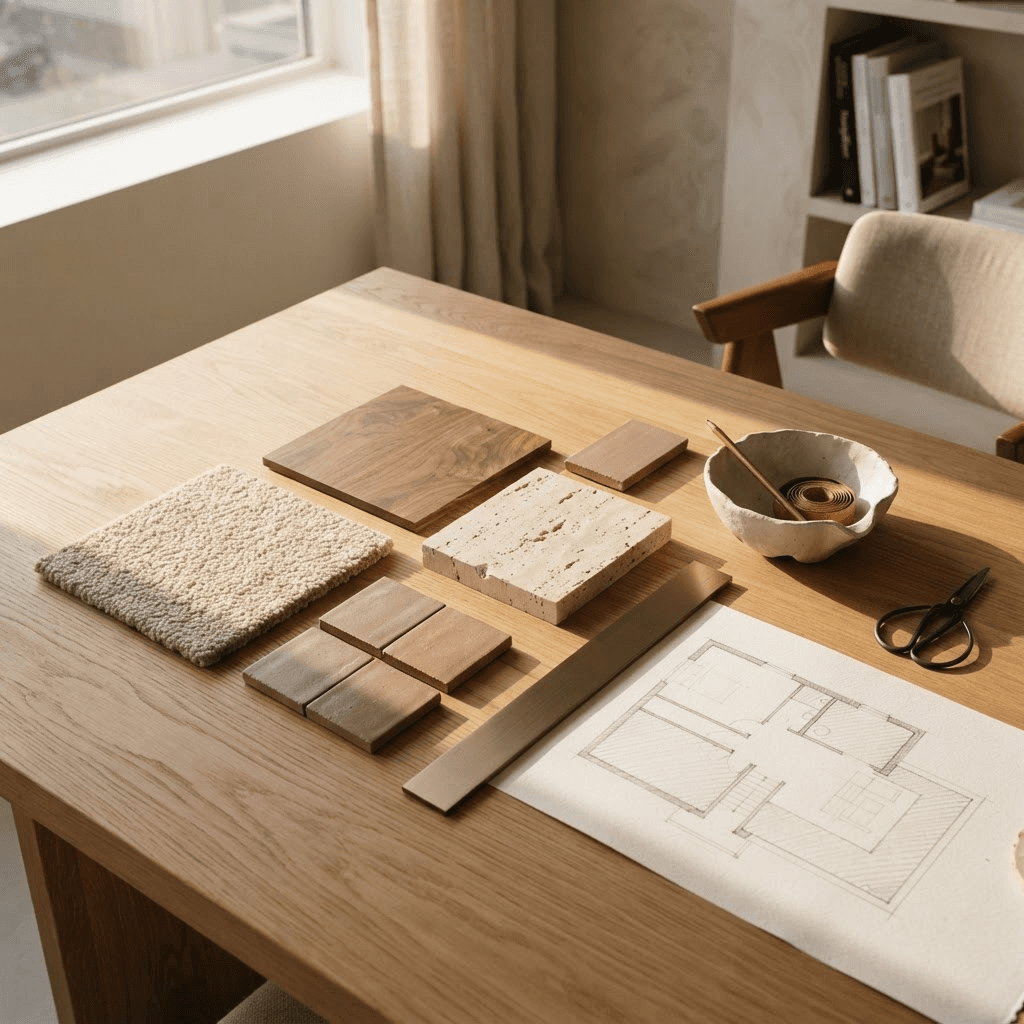
The more specific your brief, the more useful the supplier comparison. A moodboard alone cannot define a production order.
- List your rooms, products, quantities and destination country.
- Record dimensions, access constraints, preferred materials and finishes.
- Separate your product budget from shipping, service fees and local costs.
Compare specifications, not just photos
Products that look similar can differ in construction, durability and suitability for your market.
- Confirm materials, construction, finish, dimensions and minimum order quantities in writing.
- Agree samples, colour references and approval steps before production.
- Check warranty terms, spare parts and required product certifications.
Build a complete landed-cost picture
A factory quotation is not automatically a delivered-and-installed price. Ask which party pays for each part.
- Itemise product prices, service fees, packaging, inland transport and international freight.
- Check insurance, customs clearance, duties, taxes, destination handling and last-mile delivery.
- Ask a qualified destination broker to confirm classification and current duties. Do not assume a fixed global tariff or saving.
Agree the checks and shipping responsibilities
Make your inspection and delivery expectations part of the agreed scope, not an assumption.
- Confirm the production schedule, payment milestones and what happens if an order is delayed or fails inspection.
- Define the inspection criteria, reporting, remediation and packing requirements.
- Confirm shipping terms, shipment documents, insurance cover and how damage claims will be handled.
Plan for your particular project
A home, a hotel and a prefab building require different preparation. Local requirements still apply to factory-made products.
- For a whole home, coordinate supplier schedules and consolidation before ordering.
- For hospitality, agree sample-room approvals, repeat quantities and relevant fire or durability requirements.
- For prefab homes, confirm permits, local engineering, foundations, installation and utilities with qualified local professionals.
This reference is a US example, not worldwide customs advice. Confirm current requirements with the authorities or a qualified broker in your destination country.